
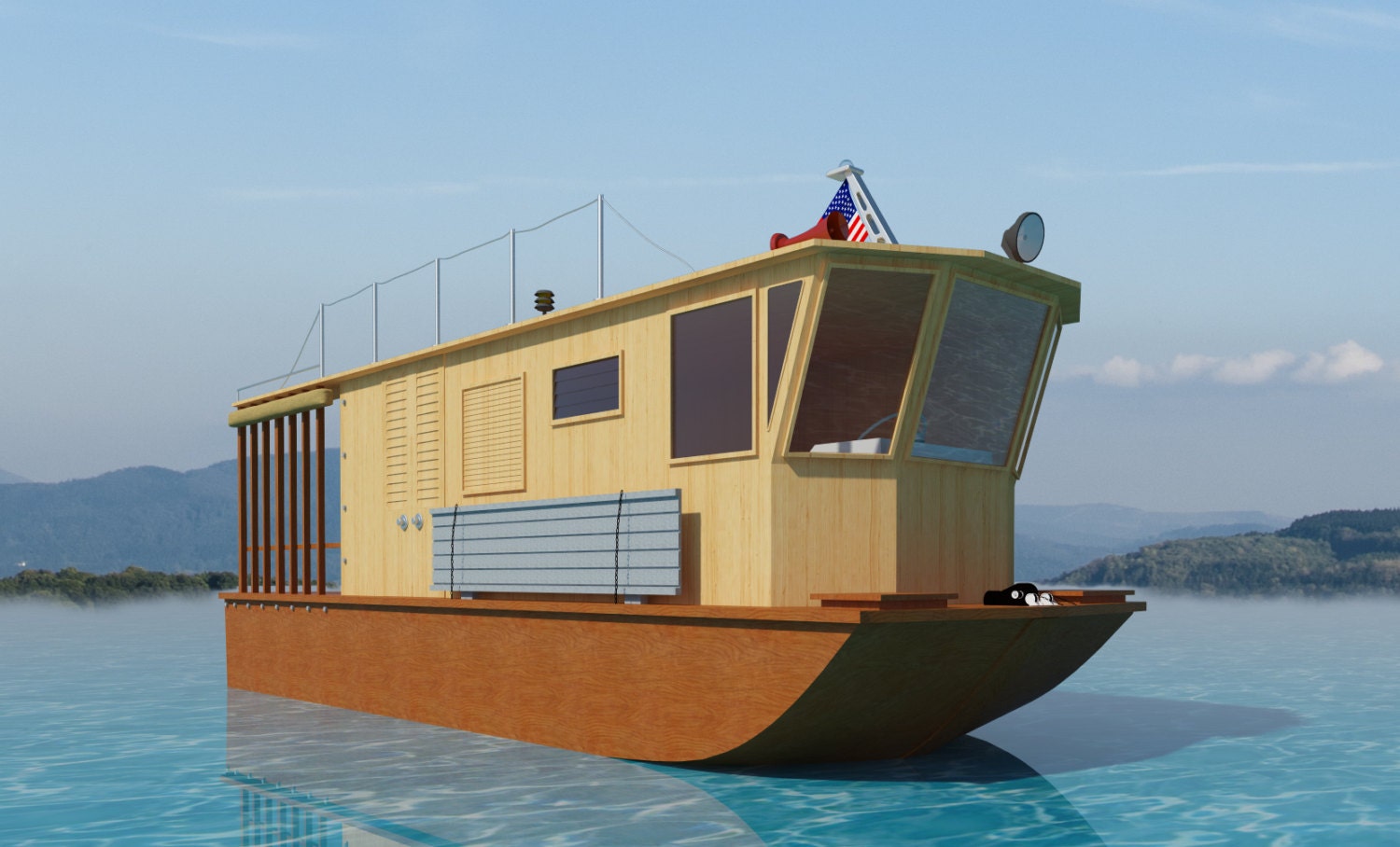
Houseboat Plans for a Compact, Sturdy Floating Home
Dreaming of a life on the water? A houseboat offers a unique and liberating lifestyle, allowing you to explore waterways, enjoy breathtaking views, and wake up to the gentle rocking of the waves. But before you set sail on your aquatic adventure, careful planning is crucial. Creating a compact and sturdy floating home requires meticulous attention to detail, from the hull design to the interior layout. This guide will walk you through the essential elements of houseboat plans for a cozy and durable sanctuary on the water.
Choosing the Right Hull Design
The foundation of your houseboat is the hull, which determines its stability, buoyancy, and resistance to waves. Here are some popular hull designs to consider:
Pontoon Hulls
Pontoon hulls are known for their stability and versatility. They typically consist of multiple pontoons, often made of aluminum or steel, connected by a deck. Pontoons provide a wide base, making the houseboat less prone to rocking and providing ample storage space below.
Monocoque Hulls
Monocoque hulls are single-piece structures, often constructed from fiberglass or steel. They offer a sleek, streamlined profile and are generally more fuel-efficient than pontoon hulls. However, they can be less stable in rough waters and may require more specialized construction techniques.
Catamaran Hulls
Catamaran hulls feature two parallel hulls, creating a wider footprint and providing excellent stability. They are often chosen for larger houseboats due to their spacious interior and ability to handle rough seas.
Prioritizing Structural Integrity
Ensuring the structural integrity of your houseboat is paramount. Here are some crucial considerations:
- Materials: Choose durable and water-resistant materials for the frame, walls, and roof. Marine-grade plywood, treated lumber, and fiberglass are excellent options.
- Framing: Use sturdy framing members to support the weight of the structure and resist flexing and twisting. Consider using steel or aluminum for added strength.
- Insulation: Insulation is essential for creating a comfortable and energy-efficient living space. Choose moisture-resistant insulation materials suitable for marine environments.
- Flooring: Opt for waterproof flooring materials that can withstand moisture and foot traffic. Vinyl, tile, or composite decking are popular choices.
Optimizing Space in a Compact Layout
Creating a functional and comfortable living space within a compact houseboat requires clever design solutions. Here are some tips to maximize space:
Multifunctional Furniture
Invest in furniture that serves multiple purposes, such as a sofa bed that converts into a guest bed or a dining table that folds down to create additional floor space.
Vertical Storage
Utilize vertical space for storage by incorporating shelves, cabinets, and overhead compartments. This helps keep belongings organized and out of the way.
Open Floor Plan
An open floor plan creates a sense of spaciousness. Consider removing walls to create a seamless flow between living areas.
Essential Systems and Amenities
A comfortable houseboat requires a variety of essential systems and amenities:
Water and Sewage Systems
Install a reliable freshwater system with storage tanks and a water heater. A holding tank for wastewater and a pump-out system are also necessary.
Electrical System
Provide adequate electrical power with solar panels, generators, and a battery bank. A reliable electrical system is crucial for lighting, appliances, and comfort.
Heating and Cooling
Consider installing a heating and cooling system to maintain a comfortable temperature year-round. Choose systems designed for marine environments.
Safety and Regulations
Safety and compliance with regulations are paramount. Here are some important considerations:
- Fire Safety: Equip your houseboat with fire extinguishers, smoke detectors, and a fire suppression system. Ensure proper ventilation.
- Navigation Lights: Install proper navigation lights to make your houseboat visible at night.
- Life Jackets: Always keep enough life jackets on board for every person.
- Local Regulations: Familiarize yourself with local regulations for houseboats, including registration, mooring, and wastewater disposal.
Building a compact, sturdy houseboat requires careful planning, skilled craftsmanship, and a commitment to safety. By following these guidelines and working with experienced professionals, you can create a unique and comfortable floating home that allows you to embrace a life on the water.
0 comments:
Post a Comment
Note: Only a member of this blog may post a comment.